Showing posts with label research foundation. Show all posts

Wednesday, 30 March 2016

table

The "Form Table" is a futuristic table sculpture. It's constructed by hand in welded aluminum by sculptor Bruce Gray. 
It's elegant sweeping S curve supports an odd angled glass top. This piece of ultra-modern functional art furniture is 
one of Bruce's most popular designs

The "Gears Table" (16 1/2" x 48" x 24") is fabricated out of 35 industrial gears in steel, stainless steel and brass by Los Angeles metal sculptor Bruce Gray. This stunning and unique heavy duty coffee table is constructed with hidden welds to make it look like it could almost function in some unexpected way. 

Wednesday, 2 March 2016

alan jones

Hatstand, Table and Chair are a group of three erotic sculptures by British pop artist Allen Jones, created in 1969 and first exhibited in 1970. They have been described in retrospect as "emblematic of the spirit of the 1960s"[1] and an "international sensation."[2] At the time they were met with angry protests, particularly from feminists who saw them as an objectification of women.

Tuesday, 19 January 2016

roberto semprini

Loosely based on the Tatlin tower (a wooden model of which is on display at Beaubourg in Paris), this spiral sofa is a centrepiece for living rooms and public areas, a new form of seating. Its plywood base has metal feet and the spiral, a true work of engineering, is in moulded and wrought steel. The filling is in flexible and breathable polyurethane foam and the upholstery in velvet or on request other fabrics and leather from the fabric collection.


poul m volther

His early chair designs were based on a series of cushions separated by open spaces in order to economize on materials which were difficult to obtain after the Second World War. The first model, the Pyramid Chair from 1953, with foam and cloth elements, was far from successful. But the same basic approach eventually led to his masterpiece, the Corona Chair, first designed in 1961. The original consisted of a wooden skeleton on which a series of oval cushions provided the seat and the rising back. The idea was that it would allow the body to relax in various positions. 

marc newton

He describes his 1988 Embryo Chair as "one of the first pieces where I hit upon a discernible style"
His work has become amongst the highest selling in auctions. One of his three Lockheed Lounge chairs sold for $968,000 at Sotheby's in 2006,[8] and £1,100,000 at a 2009 auction at Phillips de Pury & Company.[9] At the 2006 Design Miami fair he produced 12 Chop Top tables, all of which sold out in 20 minutes at an estimated $170,000.

andrea brandi

His work and interests relate to industrial design, architecture, urban planning, and cultural promotion. He also works as a professor of industrial design at the Politecnico di Milano University.
Together with Paolo Deganello, Massimo Morozzi, Gilberto Coretti, Dario and Lucia Bartolini he founded the Archizoom Associatiin 1966. He is a promoter of the Italian Radical Architecture movement. From the Radical Period, came the very famous Superarchitettura theoretical framework, which brought his work to Anti-Design. From 1976, he participated in the movement Alchimia, founded by Alessandro Guerriero. The movement was defined as a laboratory for experimental industrial design.

ron arad

Jon arads work inspires me as I like his use of materials whether its strong macho steel which has a nod to brutalism from the 50s, or his ready mades which show his interest in dada and marcel Duchamp.

eero aarnio

Aarnio's designs were an important aspect of 1960s popular culture, and could often be seen as part of sets in period science-fiction films.[3] Because his designs used very simple geometric forms, they were ideal for such productions. Eero Aarnio continues to create new designs, including toys and furniture for children. 

verner panton

Verner Panton's passion for bright colours and geometric patterns manifested itself in an extensive range of textile designs. By fusing the elements of a room – floor, walls, ceiling, furnishings, lighting, textiles and wall panels made of enamel or plastic 

alvar aalto

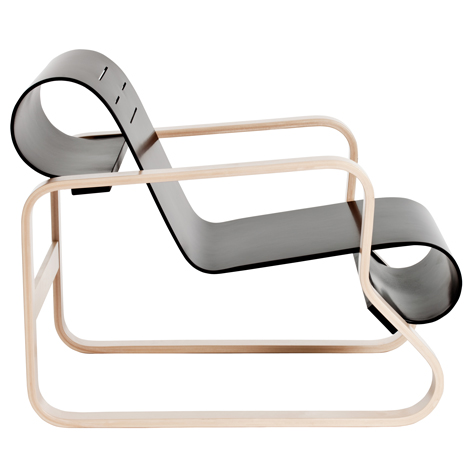
alto wished to learn "the language of wood fibres" and believed that there is a positive effect when our skin comes into contact with natural materials.n 1935, Aino and Alvar Aalto founded the Finnish company Artek to manufacture their designs. Today, Artek remains faithful to the Aaltos' basic values as their master craftspeople continue to produce Aalto designs in Finland with high quality natural materials.

le corbusier

Once quoted as saying that ‘chairs are architecture, sofas are bourgeois", Le Corbusier began experimenting with furniture design in 1928. The most famous of his collection is the now-iconic LC-Set. Indeed, the LC-2 and LC-3 Chairs are more colloquially referred to as the Petit and Grande Armchairs respectively. 

mies van der roche

Regarded as one of the most important figures in the history of architecture, Ludwig Mies van der Rohe’s ‘less-is-more’ approach to design was the gold standard for many generations of modern architecture. His legendary career started humbly at his father’s stonemasonry business, giving him an early appreciation of material and structure.

charles rennie machintosh

Mackintosh employed the bold and simple geometric forms that have now become so identified with his chairs and tables. His work is easily recognisable, with his frequent use of motifs such as the stylised Glasgow rose, seen in so many of his projects, that embodies his pursuit of simplicity, symbolism and abstraction. He used mediums such as glass, lead, metals, wood, ceramics and textiles in his designs for such diverse items as furniture, doors, windows and cutlery. Mackintosh designed churches, a number of the spectacular Cranston tearooms in Glasgow, numerous private homes, schools and offices, as well as interiors and the metalwork, stained glass, textiles and furniture that inhabited his spaces. He believed in furniture that was truly practical and functional and that it should relate intrinsically to the architecture to make a cohesive whole

michael thong

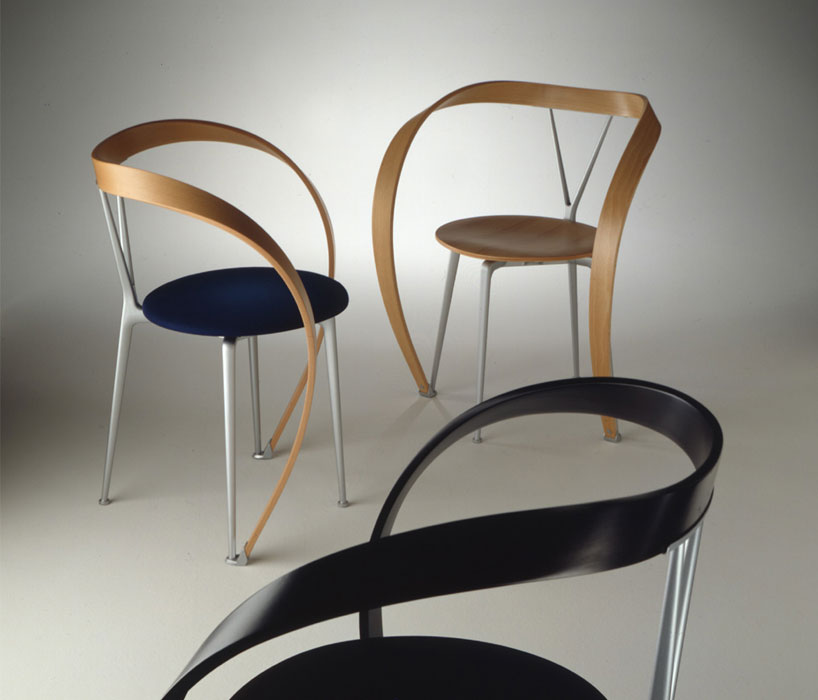
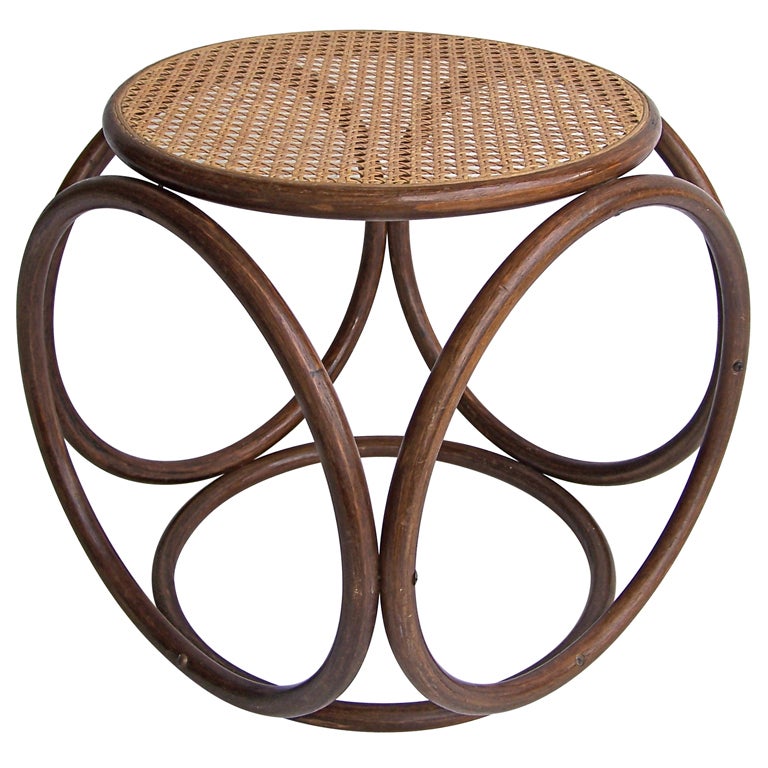
In the 1830s, Thonet began trying to make furniture out of glued and bent wooden slats. His first success was the Bopparder Schichtholzstuhl (Boppard layerwood chair) in 1836.
Thonet's essential breakthrough was his success in having light, strong wood bent into curved, graceful shapes by forming the wood in hot steam. This enabled him to design entirely novel, elegant, lightweight, durable and comfortable furniture, which appealed strongly to fashion - a complete departure from the heavy, carved designs of the past - and whose aesthetic and functional appeal remains to this day.
The success of the company Thonet GmbH in Frankenberg, Germany, began with the work of master joiner Michael Thonet (1796-1871). Since he founded his first woodworking shop in 1819 in Boppard, the name Thonet has stood for high-quality, innovative and elegant furniture.

Wednesday, 14 October 2015

plans for trip to notts

trains

trains from worksop to notts
every half the hour

trains from notts to worksop
every hour


Galleries

thoresby street
- open 12 -6
- 10 mins from station

Backlit, ashley street
- open 12 - 5
- 10 mins from thoresby
- 20 mins from station

Tuesday, 13 October 2015

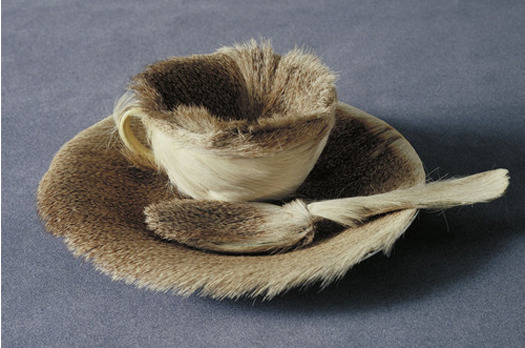
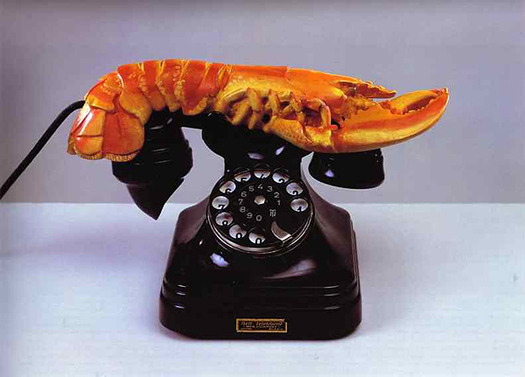
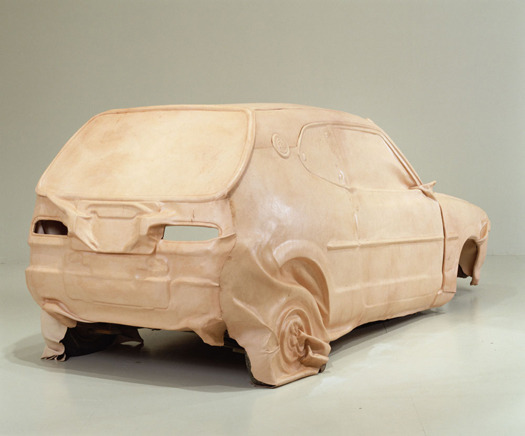
surrealist links to product design

http://designobserver.com/article.php?id=37901

Though most of these artists would probably not think of themselves as “Surrealists” (in the pure context of the definition)—the idea of recontextualization is something they obviously enjoy.
Artist: Meret Oppenheim

Artist: Salvadore Dali

Artist: Michelle Lopez


so basically its taking something and putting it out of context, so it doesn't work
but maybe i could make it work technically but think of a material or a structure shouldn't work.

Monday, 28 September 2015

dada college

Dada artists “could attack the bourgeoisie with distortions of its own communications imagery. The man on the street could be shocked to see the components of a familiar letter of his newspapers and posters running amuck.

Tuesday, 22 September 2015

baroness elsa von freytag-loringhoven

The urinal was Elsa’s declaration of war against a man’s war—an extraordinary visual assault on all that men stood for.
If Duchamp did not submit the urinal, why would he pretend later that he did? After Elsa died in 1927, forgotten and in abject poverty, Duchamp began to let his name be associated with the urinal, and by 1950, four years after the death of Alfred Stieglitz, who photographed the original Fountain, he began to assume its authorship. 

Monday, 21 September 2015

duchamps ready mades

duchamp revolutionized art history with the readymade. By transforming everyday objects into fine art, Duchamp not only set the precedent for the incorporation of industrial, mass-produced products in art, he also bestowed the artist with a brand new power. However, he did not think of the readymade as revolutionary; to him, paint and canvas were already manufactured products, therefore all art was already an “assisted-readymade.” He strove to separate himself from the established approaches to art, and instead stress the importance of the concept behind the art. He used irony to real-in the mainstream audience, then provided them with works that were contradictory to everyone’s perception of artistic talent. The ingenuity of an art work could now be derived from its concept, not only its execution. This collapsed conventional modes of artistic practice through his satirical sculptures, and the resulting aftershock can still be seen influencing artists today.
bottle rack 1914
in advance of the broken arm